
 DoseCraft
 VapeHeatLab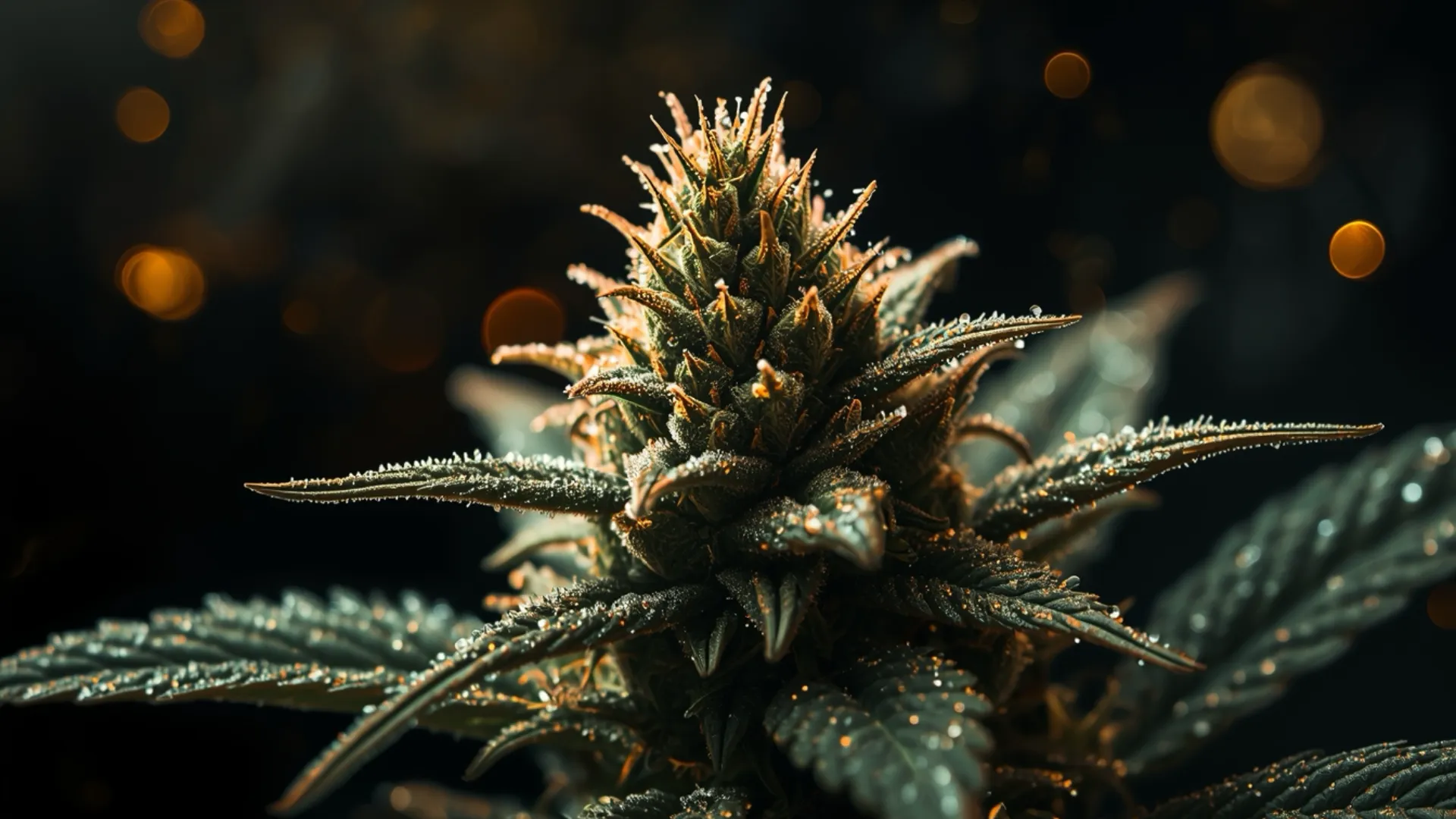
Forbidden Fruit
by Chameleon Extracts · Cherry Pie × Tangie
About
Forbidden Fruit is an indica-dominant hybrid, approximately 70 percent indica, introduced commercially around 2016. The breeder credit is contested across sources: some attribute the strain to Chameleon Extracts (a Santa Clara, California operation), others to Dutchgrown Seeds, and at least one source names a San Francisco connection. The cross itself is well-established as Cherry Pie crossed with Tangie, which pairs two earlier California-era hybrids from different ends of the flavor spectrum. The cross logic is worth noting. Cherry Pie, with its Granddaddy Purple and Durban Poison lineage, contributes the sweet cherry-berry base and the indica body. Tangie, with its California Orange and Skunk lineage, brings the citrus-tangerine brightness. The result is a strain that reads as "tropical fruit candy" on first impression but delivers the body response of a classical indica underneath. The terpene data in our database shows myrcene leading at 0.31%, with pinene at 0.17% and caryophyllene at 0.16% in a close second and third. The presence of pinene as the second-highest terpene is unusual for a fruit-forward hybrid, and it contributes the fresh, almost alpine note that sits underneath the sweeter fruit character. Linalool at 0.08% and beta-pinene at 0.07% round out a relatively flat distribution. Our database chemotype classification is "Blue (Myrcene-dominant)", consistent with the indica-leaning hybrid profile. THC ranges between 15.3 and 20.8% across the lab samples, moderate for a modern commercial strain. The CBD range in our records is 0.17 to 0.24%, which is higher than most THC-dominant commercial strains and worth flagging for consumers who track cannabinoid balance. The effects record is limited to euphoric as the only tracked effect, a notable gap given Forbidden Fruit's commercial presence.
Why does Forbidden Fruit have these effects?
Forbidden Fruit's effects are driven by its dominant myrcene (0.31%), which has sedative and muscle-relaxant properties, combined with pinene (0.17%), associated with alertness and mental clarity.
Strain Profile
May Help With
Caryophyllene has strong anti-inflammatory properties
Myrcene has analgesic and muscle-relaxant properties
Linalool has calming, stress-relieving properties
Linalool is known for anti-anxiety effects
Based on terpene research and reported effects. Not medical advice. Consult a healthcare professional for medical decisions.
Similar Strains
Strains with a similar profile you might enjoy
Effects
Flavors & Aroma
Quick Info
- Type
- indica
- Breeder
- Chameleon Extracts
- Genetics
- Cherry Pie × Tangie
- THC
- 15.3–20.8%
- CBD
- 0.2%
- Chemotype
- Myrcene-dominant
Genetics

What is Myrcene?
The most common cannabis terpene, also found in mangoes, hops, and lemongrass.
Learn more →
← Back to all strainsAbout Forbidden Fruit
- Forbidden Fruit is a indica cannabis strain.
- Forbidden Fruit typically tests at 15.3% to 20.8% THC.
- The dominant terpenes in Forbidden Fruit are Myrcene, Pinene, Caryophyllene. Terpenes influence the aroma, flavor, and effects of a cannabis strain.
- Forbidden Fruit is a cross of Cherry Pie and Tangie. It was bred by Chameleon Extracts.