
 DoseCraft
 VapeHeatLab
Moissanite Dab Insert Guide: Accurate Low Temperature Vaporization Explained
Low temperature vaporization is often preferred for flavor and smoothness, but many users struggle with inconsistent results. Sometimes a device reaches the set temperature, yet vapor production feels delayed or weak. The reason is not always the heater — it is often the insert material. This guide explains how a moissanite dab insert behaves differently ...
Low temperature vaporization is often preferred for flavor and smoothness, but many users struggle with inconsistent results. Sometimes a device reaches the set temperature, yet vapor production feels delayed or weak. The reason is not always the heater — it is often the insert material. This guide explains how a moissanite dab insert behaves differently due to heat transfer properties and why it can improve low temperature performance.
More inhalation technique guides: Smoke / Vape / Blaze
Why Temperature Alone Can Be Misleading
When a device displays a temperature, that number represents the heater sensor — not necessarily the surface touching the material.
Some inserts warm slowly. Others reach equilibrium quickly.
If the insert heats slowly:
- The load receives less energy initially
- Vapor appears weak
- Users increase temperature unnecessarily
If the insert heats quickly:
- The load receives energy immediately
- Vapor appears at the expected temperature
- Flavor remains intact
This difference is caused by heat transfer speed rather than calibration accuracy.
What Makes Moissanite Different
Moissanite is a single crystal form of silicon carbide. Unlike polycrystalline materials made from many fused grains, it has a continuous structure that allows heat to travel efficiently across the surface.
Key characteristics
- Extremely high thermal conductivity
- Even heat distribution
- Minimal warm-up delay
Because of this, a moissanite dab insert tends to match the heater’s temperature more closely than slower materials.
Comparing Common Insert Materials
Different inserts behave differently at the same temperature.
Quartz
- Slow heat transfer
- Requires higher temperature settings
- Longer warm-up period
Ruby (Aluminum Oxide)
- Better heat retention than quartz
- Still warms gradually
- Often feels cooler than the set temperature
Polycrystalline Silicon Carbide
- Faster heat distribution
- More consistent performance
- Lower required temperatures
Moissanite
- Very fast heat movement
- Immediate response to heater
- Accurate low temperature vaporization
Why Low Temperature Performance Improves
Flavor compounds release at lower energy levels than heavier components. If an insert warms slowly, the material spends time heating instead of vaporizing.
With fast heat transfer:
- Vapor forms quickly
- Less overheating required
- More efficient extraction
This is why lower temperature sessions often feel more accurate with a moissanite dab insert.
Heat Soak and Responsiveness
Many setups require a heat soak period so the insert can reach equilibrium. Faster materials reduce or eliminate this waiting time.
Practical effects:
- Consistent first inhale
- Less temperature guessing
- Predictable results
The heater setting becomes closer to the actual vaporization temperature.
Durability and Maintenance
Moissanite is highly resistant to scratching, which affects long-term cleanliness.
Benefits:
- Less residue sticking
- Easier cleaning
- Stable surface over time
Because the surface remains smooth, performance stays consistent across repeated use.
Efficiency Considerations
Faster heat transfer does not necessarily mean stronger effects — it means energy is delivered efficiently.
Users often notice:
- Better flavor retention
- Reduced reheating
- Cleaner residue after sessions
These outcomes come from accurate energy delivery rather than higher temperatures.
Practical Takeaways
Understanding insert materials helps interpret performance:
- Same temperature does not mean same surface heat
- Slow materials require higher settings
- Fast materials improve low temperature vaporization
Rather than adjusting only temperature, consider how quickly the insert moves heat.
Small temperature adjustments combined with material choice often matter more than chasing higher settings for thicker vapor production overall consistency.
Frequently Asked Questions
Does a moissanite insert make vapor stronger?
Why do some inserts need higher temperatures?
Is heat soak always necessary?
Does this apply only to concentrates?
Is higher temperature better for flavor?
References
Where to Buy
- To pick up a JCVAP Grade D Insert for Pockety or Puffco Peak Pro please visitaffiliate10% with code herbistry420
- To pick up a JCVAP Grade C Insert for Pockety or Puffco Peak Pro please visitaffiliate10% with code herbistry420
- To pick up a JCVAP Grade B Insert for Pockety or Puffco Peak Pro please visitaffiliate10% with code herbistry420
- To pick up a JCVAP Grade A Insert for Pockety or Puffco Peak Pro please visitaffiliate10% with code herbistry420
- To pick up a JCVAP ICA 5D V2 Chamber with Diamondium Grade D Insert for Pockety and Peak Pro please visitaffiliate10% with code herbistry420
- Cannabis Apparel Store
Some links above are affiliate links. We may earn a commission at no extra cost to you.
From the Shop
See all

Related Posts
Hash in a Ball Vape: How I Run It in the Universal Baller at 626°F
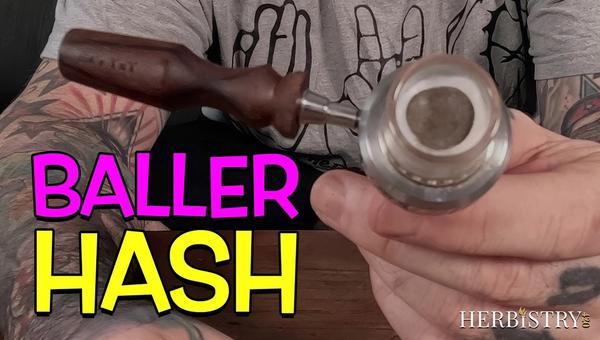
Part two of the Universal Baller run, this time with hash. 626°F with the quartz insert out, a small disc of filtered 4 star on a Cotton Bacon screen, a 30 second heat soak and then small puffs to build heat in the bowl. The thing that decides the session is heat stacking, so the real skill is loading an amount you can finish before the window closes.
How to Change Ball Media in the Ruby Twist Pro (Flavor and Performance Mode)
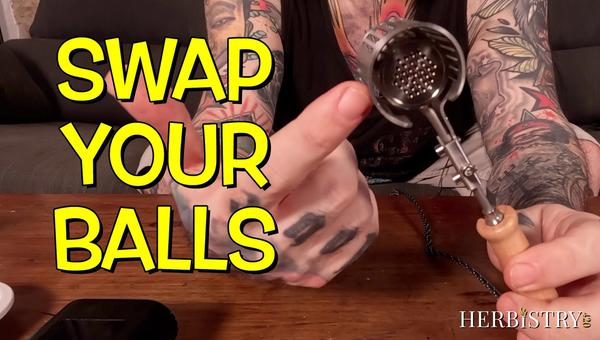
The Ruby Twist Pro runs two setups: flavor mode with the stock 2.5mm rubies and the cyclone widget, or performance mode with the widget out and more balls in. This guide walks the full media swap in both directions, start to finish, in about four minutes.
What Is AVB? Why You Should Never Throw Away Vaped Bud
What is AVB? If you've been dry herb vaping and throwing away the spent material at the end of each session, you've been throwing away something valuable. AVB — Already Vaped Bud (also called ABV, Already Been Vaped) — is the cannabis left over after vaporizing, and it's still worth using. In this guide, we'll ...