
 DoseCraft
 VapeHeatLab
Pressing Static Dry Sift Hash Into Rosin (Full Yield Method)
Pressing Static Dry Sift Hash into rosin is one of the most rewarding solventless techniques you can do at home. Knowing how to press hash properly separates a mediocre result from clean, terpene-rich rosin with strong yields. This guide walks through the humidity control, bag selection, bottle tech prep, and pressing technique that TerpHunter and ...
Pressing Static Dry Sift Hash into rosin is one of the most rewarding solventless techniques you can do at home. Knowing how to press hash properly separates a mediocre result from clean, terpene-rich rosin with strong yields. This guide walks through the humidity control, bag selection, bottle tech prep, and pressing technique that TerpHunter and Fordee use to get the most from quality static sift.
Pressing Static Dry Sift Hash: Why Humidity is the Hidden Key
The single biggest variable in this process is relative humidity. Before pressing, hash should be stabilized in a sealed jar with a hygrometer at 58%–62% RH. Too dry (below 58%) and the oil reabsorbs into the material. Too wet (above 62%) leads to contamination and unstable pressing. The closer you sit to 62%, the better the yield — and it can shift results by double-digit percentages. Store your material in a violet storage jar and monitor it before every press.
How to Press Static Dry Sift Hash: Bag and Prep
Before you learn how to press static dry sift hash effectively, you need the right bag. The most common choice is a 35-micron rosin bag — it balances yield against purity for home use. A 25-micron bag produces cleaner rosin but lower yield. For near-full-melt quality material, some producers press without a bag entirely (just parchment), but only if there’s zero plant contamination present.
Bottle tech prep prevents rosin from getting trapped in bag corners. Fold the bottom corners inward, stand it upright, fill evenly, compress gently, and fold the top flat before pressing.
Rosin Press Hash: Temperature and Technique
The ideal rosin press hash temperature range for static sift is 160°F–170°F. Lower temps preserve more terpenes and produce lighter-colored rosin; higher temps increase yield at some cost to flavor. Apply pressure in pulses rather than a single heavy push. Hash behaves differently than flower — progressive pressure encourages the oil to flow without blowouts.
- Pre-heat phase: Light pressure for 30–60 seconds to warm the heads
- Active press: 2–3 minutes total, gradual pulses
- Expected yield: 25%–35% return when humidity and prep are dialed
A dry sift hash press that yields below 20% almost always points back to incorrect humidity, not technique. Fix the RH first before adjusting temps or pressure.
Why Rosin Comes Out Dark
Dark color is rarely caused by pressing temperature alone. The most common cause is oxidized starting material — hash that’s been exposed to air, light, or warmth for too long before pressing. Even at low temperatures, aged material presses darker. Minimize post-collection exposure by jarring immediately and storing cool and dark until pressing day.
Frequently Asked Questions
What is the best temperature for pressing static dry sift hash?
How to press static dry sift hash for the best yield?
How to press hash without a bag?
What micron bag should I use for a dry sift hash press?
References
Where to Buy
- To pick up a Graveda 10T Press please visitaffiliate
- To pick up the Violet Storage Jar used in the video visitaffiliate15 with code herb420
- Cannabis Apparel Store
Some links above are affiliate links. We may earn a commission at no extra cost to you.
From the Shop
See all


Related Posts
Press Dry Sift Hash Rosin Yield — 5 Amazing Tips
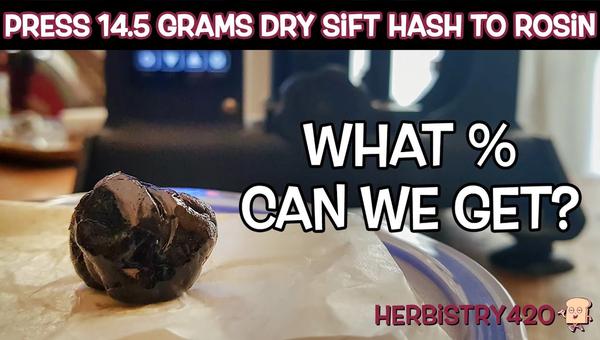
Want to press dry sift hash rosin yield at home and actually get results worth bragging about? In this session, Fordee from Herbistry420 presses 14.52 grams of dry sift hash using a rosin press and documents every step — from bagging the hash to weighing the final yield. The result? 6.71 grams of rosin, landing ...
 News
NewsThe Rise of Solventless: Why Rosin Is Taking Over Europe
Solventless concentrates like rosin are gaining ground fast across Europe. Here is what is driving the shift, how rosin is made, and why consumers are choosing it over solvent-based options.

OEM Gravity Bong Review: 5 Powerful Reasons to Buy
This OEM gravity bong review covers everything you need to know about the AliExpress gravity hookah that looks and feels just like a Studenglass — at a fraction of the price. After using it nightly for over a week through flower and dab sessions, here's the honest verdict. What Is the OEM Gravity Bong? The ...