
 DoseCraft
 VapeHeatLab
Understanding Cannabis Terpenes: What They Do and Why They Matter
A deep dive into the 8 most important cannabis terpenes. What they are, what they do, their boiling points for vaping, and how the entourage effect works.
by Fordee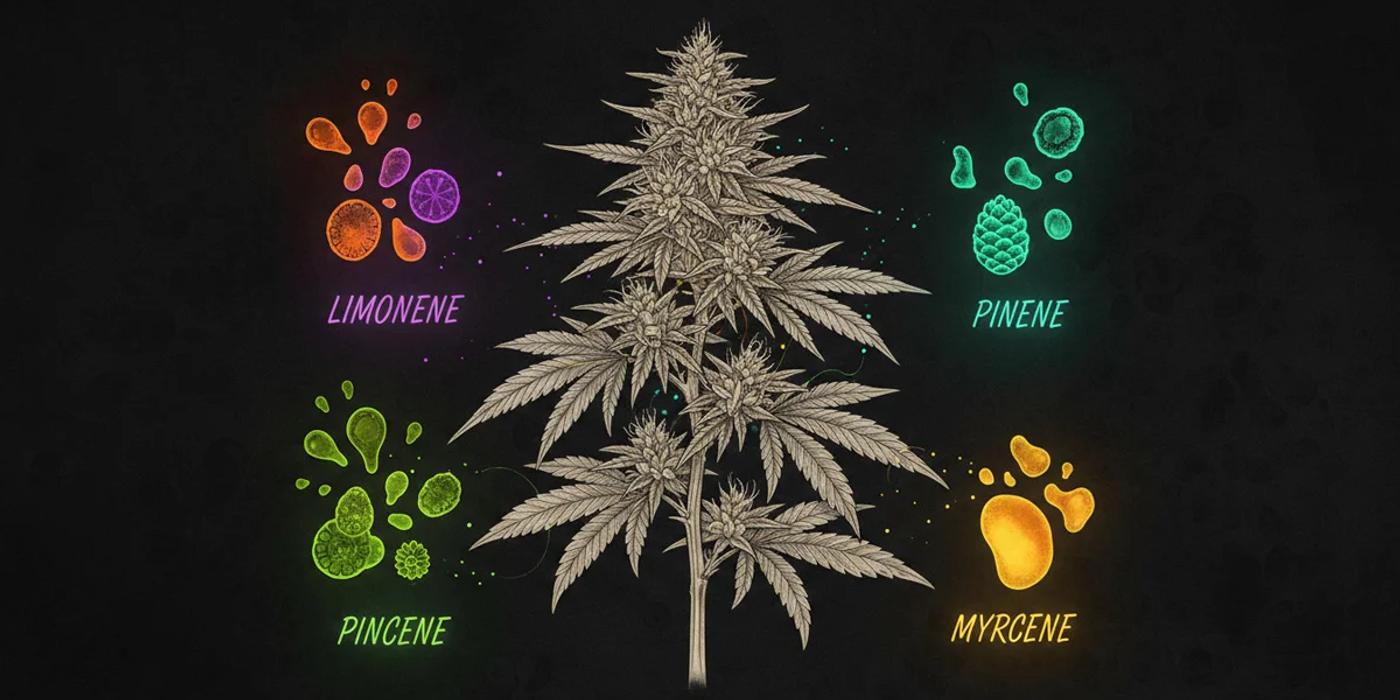
What Are Terpenes?
Terpenes are aromatic compounds found in virtually all plants. They are what makes lavender smell like lavender, lemons smell like lemons, and pine trees smell like pine. Cannabis produces over 200 different terpenes, and they do a lot more than just create a nice aroma.
In cannabis, terpenes are produced in the same glands that produce THC and CBD, the trichomes. Those frosty crystals you see on quality flower? That is where the magic happens. Terpenes work alongside cannabinoids to shape the effects of each strain, which is why two strains with identical THC percentages can feel completely different.
This is not just marketing or bro-science. There is a growing body of research supporting the idea that terpenes modulate the effects of cannabinoids in meaningful ways.
The 8 Most Important Cannabis Terpenes
1. Myrcene
Aroma: Earthy, musky, herbal, with hints of clove
Boiling point: 168°C (334°F)
Myrcene is the most abundant terpene in cannabis, often making up 20% or more of a strain's terpene profile. It is associated with sedating, relaxing effects and is the terpene most responsible for that classic couch-lock feeling in indica-dominant strains.
Beyond cannabis, myrcene is found in mangoes, hops, and thyme. There is a popular belief that eating a mango before consuming cannabis enhances the high, which may have some basis in myrcene's ability to increase cell membrane permeability, potentially allowing THC to cross the blood-brain barrier more efficiently.
2. Limonene
Aroma: Citrus, lemon, orange peel
Boiling point: 176°C (349°F)
Limonene is uplifting and mood-enhancing. It is the terpene responsible for the bright, energizing quality of strains like Super Lemon Haze and Tangie. Research suggests limonene has anti-anxiety and antidepressant properties.
It is also found in citrus rinds, which is why many sativa-leaning strains have that distinctive citrusy smell. Limonene-dominant strains are often recommended for daytime use, stress relief, and creative activities.
3. Linalool
Aroma: Floral, lavender, slightly spicy
Boiling point: 198°C (388°F)
Linalool is the same terpene that makes lavender a go-to for relaxation. In cannabis, it contributes calming, anti-anxiety effects. Strains high in linalool tend to be soothing without being as heavily sedating as myrcene-dominant varieties.
Linalool also has notable anti-inflammatory and analgesic properties. It is a common terpene in strains used for pain management and anxiety relief. If your flower smells like a lavender field, linalool is why.
4. Pinene
Aroma: Fresh pine, forest, rosemary
Boiling point: 155°C (311°F)
Pinene is the most common terpene in nature and one of the first to vaporize at low temperatures. It is associated with alertness, mental clarity, and even memory retention. Some research suggests pinene may counteract some of the short-term memory impairment caused by THC.
Strains high in pinene tend to feel alert and focused rather than hazy. It is also a bronchodilator, meaning it helps open the airways, which is why pine-scented strains sometimes feel easier to breathe.
5. Caryophyllene
Aroma: Spicy, peppery, woody
Boiling point: 130°C (266°F)
Caryophyllene is unique among terpenes because it actually binds to CB2 receptors in the endocannabinoid system. This makes it function almost like a cannabinoid itself, with notable anti-inflammatory and analgesic effects.
It is found in black pepper, cloves, and cinnamon. Interestingly, sniffing or chewing black peppercorns is a popular folk remedy for counteracting THC-induced anxiety, and the high caryophyllene content may be why it works.
6. Humulene
Aroma: Hoppy, earthy, slightly woody
Boiling point: 198°C (388°F)
Humulene is the terpene also found in hops, which is why some cannabis strains have a beer-like aroma. It is one of the few terpenes associated with appetite suppression, making it notable for users who want to avoid the munchies.
Humulene also has anti-inflammatory and antibacterial properties. It is often found alongside caryophyllene in strain profiles.
7. Terpinolene
Aroma: Herbal, piney, slightly floral
Boiling point: 186°C (367°F)
Terpinolene is a less common terpene but a significant one. It is associated with mildly sedating effects and is found in strains often described as creative or dreamy. Jack Herer, one of the most popular sativa strains, is terpinolene-dominant.
It also appears in tea tree, nutmeg, and apples. Terpinolene-dominant strains are relatively rare, making them a bit of a unicorn in the cannabis world.
8. Ocimene
Aroma: Sweet, herbal, woody
Boiling point: 100°C (212°F)
Ocimene is a very volatile terpene, meaning it evaporates easily and is one of the first compounds released when you heat cannabis. It has decongestant, antiviral, and antifungal properties. In terms of effects, it tends to be uplifting and energizing.
Because it vaporizes at such a low temperature, ocimene is one of the main reasons why the first draw from a vaporizer at low temperatures tastes so fresh and aromatic.
The Entourage Effect
The entourage effect is the theory that cannabis compounds work better together than in isolation. THC alone produces certain effects, but when combined with specific terpenes and other cannabinoids, those effects are modulated, enhanced, or softened.
For example, a strain with high THC and high myrcene will feel more sedating than one with the same THC level but high limonene. The terpenes are literally shaping your experience.
This is also why many cannabis users prefer whole-flower products over isolates. The full spectrum of compounds working together creates a more nuanced, balanced experience than any single compound can on its own.
Dr. Ethan Russo's research on the entourage effect has been particularly influential, demonstrating that terpenes can enhance the therapeutic effects of cannabinoids while potentially reducing side effects like anxiety or paranoia.
How to Use This Knowledge
Understanding terpenes gives you a much more sophisticated way to choose cannabis:
- Look at terpene profiles on product labels, not just THC percentage
- Choose myrcene-dominant strains for relaxation and sleep
- Choose limonene or pinene-dominant strains for daytime, creative use
- For pain relief, look for caryophyllene and linalool
- If you want to avoid the munchies, seek out humulene
If you vape, terpene temperatures matter for your session. Use VapeHeatLab to optimize your temperature settings based on the terpene profile of your strain.
Frequently Asked Questions
What are cannabis terpenes?
What is the entourage effect?
Which terpene is the most sedating?
Do terpenes get you high?
References
- Russo EB (2011). Taming THC: Potential Cannabis Synergy and Entourage Effects. British Journal of Pharmacology
- Wikipedia contributors (2026). Terpene. Wikipedia

Related Posts
 Guides
Best Vaporizer Temperature Settings for Every Cannabinoid
Find the best vaporizer temperature for THC, CBD, CBN, and key terpenes. Covers low temp vs high temp effects and how to find your sweet spot.

How to Get Higher Without More Weed — 5 Proven Tips
Want to get higher without more weed? Fordee from Herbistry420 breaks down 5 proven tips and hacks that will maximize your high without increasing how much you smoke. Whether you're trying to stretch your stash, reset your tolerance, or simply get more bang for your bowl — these techniques are practical, science-backed, and surprisingly effective. ...
Vape Temperature Guide: What Low, Mid, and High Heat Actually Do
This vape temperature guide breaks down what vaporization temperatures actually mean, which compounds they release, and how to design intentional sessions. The first step to learning any vaporization temperature guide is recognizing that temperature isn't a single number — it's a range that controls what gets released and how a session feels. When you learn ...