
 DoseCraft
 VapeHeatLab
Best Vaporizer Temperature Settings for Every Cannabinoid
Find the best vaporizer temperature for THC, CBD, CBN, and key terpenes. Covers low temp vs high temp effects and how to find your sweet spot.
by Fordee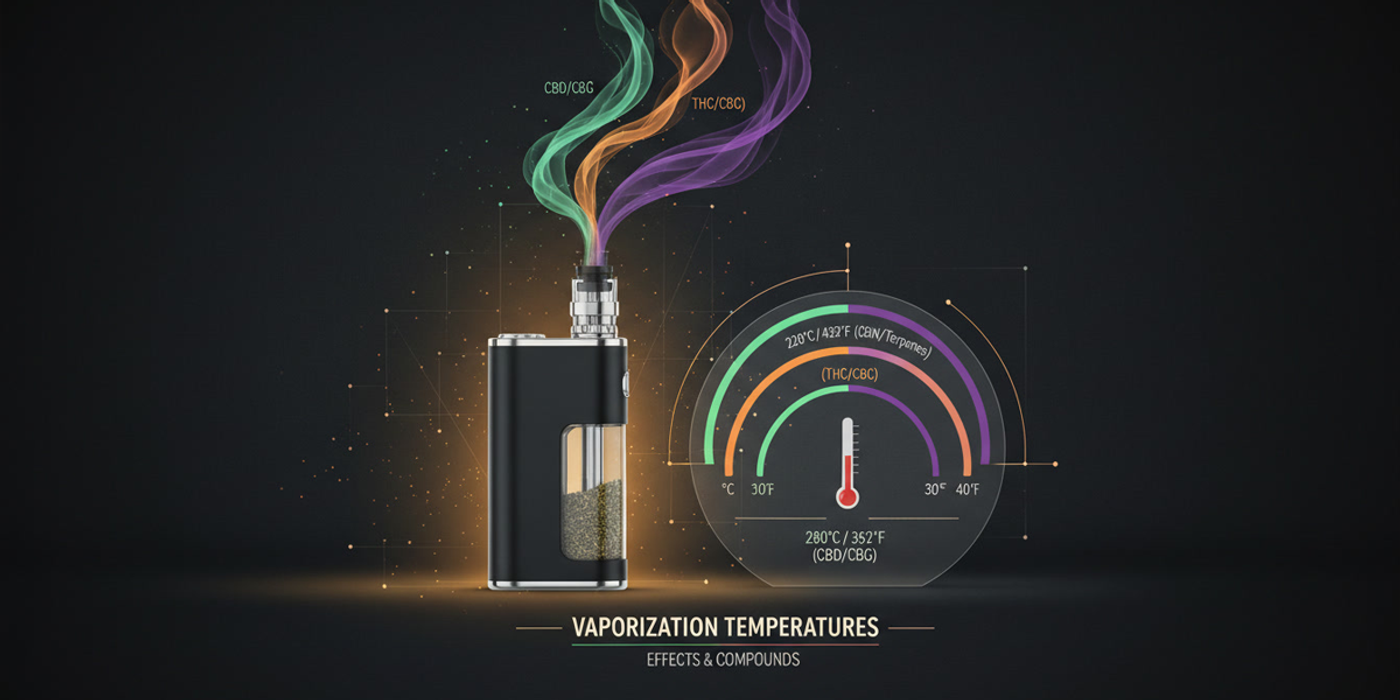
Why Temperature Matters When You Vape
Vaporizing cannabis is not just about heating it up and inhaling. The temperature you choose determines which cannabinoids and terpenes are released, which directly affects the flavor, potency, and type of effects you experience. Think of your vaporizer temperature as a dial that lets you fine-tune your session.
Set the temperature too low and you will get wispy vapor with mild effects. Set it too high and you are basically combusting, which defeats the purpose of vaping in the first place. The sweet spot is somewhere in between, and it depends on what you are trying to get out of your session.
Cannabinoid Boiling Points
Every cannabinoid has a specific temperature at which it vaporizes. Here are the key ones you need to know:
THC (Delta-9-Tetrahydrocannabinol)
Boiling point: 157°C (315°F)
THC is the primary psychoactive compound in cannabis. It starts to vaporize at around 157°C, but you will get better extraction in the 170-190°C range. At the lower end, you get a clear-headed, energetic high. At the upper end, the effects become more sedating and full-bodied.
CBD (Cannabidiol)
Boiling point: 160-180°C (320-356°F)
CBD does not produce a high but offers relaxation, anti-anxiety effects, and anti-inflammatory properties. It vaporizes at a slightly higher temperature than THC, so if you want to maximize CBD intake, aim for the 170-180°C range.
CBN (Cannabinol)
Boiling point: 185°C (365°F)
CBN is mildly psychoactive and is known for its sedating effects. It is found in aged cannabis and vaporizes at a higher temperature. If you are using cannabis to help with sleep, running your vaporizer at 185°C or above will help release more CBN.
CBC (Cannabichromene)
Boiling point: 220°C (428°F)
CBC is a non-psychoactive cannabinoid with anti-inflammatory and antidepressant properties. It requires a higher temperature to vaporize, which is another reason some users prefer finishing their sessions at a higher temp.
Terpene Temperatures
Terpenes are the aromatic compounds that give cannabis its flavor and contribute to the entourage effect. Each one has its own boiling point:
- Myrcene (earthy, musky): 168°C (334°F) — Sedating, relaxing. Found in indica-leaning strains.
- Limonene (citrus, lemon): 176°C (349°F) — Uplifting, mood-enhancing. Great for daytime use.
- Linalool (floral, lavender): 198°C (388°F) — Calming, anti-anxiety. Common in strains used for relaxation.
- Pinene (pine, forest): 155°C (311°F) — Alert, focused. One of the first terpenes to vaporize at low temps.
- Caryophyllene (spicy, peppery): 130°C (266°F) — Anti-inflammatory. Unique because it also binds to CB2 receptors.
- Humulene (hoppy, earthy): 198°C (388°F) — Appetite suppressant, anti-inflammatory.
- Terpinolene (herbal, piney): 186°C (367°F) — Mildly sedating, associated with creative strains.
- Ocimene (sweet, herbal): 100°C (212°F) — Decongestant, antiviral. Very volatile, releases early.
Low Temp vs High Temp: What to Expect
Low Temperature: 160-180°C (320-356°F)
Vaping at low temperatures produces thin, flavorful vapor. You will taste the terpenes much more clearly and the effects tend to be lighter and more cerebral. This range is perfect for daytime use when you want to stay functional and alert.
- More flavor, less vapor density
- Clear-headed, uplifting effects
- Less throat irritation
- Better for flavor chasers and microdosers
Medium Temperature: 180-200°C (356-392°F)
The middle range is where most experienced vapers settle. You get a good balance of flavor and vapor production, and the effects are well-rounded. This is the sweet spot for most sessions.
- Good balance of flavor and vapor production
- Full-spectrum cannabinoid and terpene extraction
- Balanced effects: relaxing but not sedating
High Temperature: 200-220°C (392-428°F)
High temperature vaping produces thick, dense vapor with strong effects. You lose some of the more delicate terpenes, but you extract the maximum amount of cannabinoids. This range is better for evening use or when you want the strongest possible effects.
- Thick vapor clouds, less flavor nuance
- Stronger, more sedating effects
- Maximum extraction from your material
- Closer to smoking-like effects
Anything above 230°C (446°F) risks combustion. At that point you are no longer vaping, you are smoking. Most quality vaporizers cap their temperature range below this threshold.
How to Find Your Sweet Spot
Finding your ideal vaporizer temperature is a personal journey. Here is a simple method to figure out what works best for you:
- Start at 170°C (338°F) and take a few draws. Note the flavor and how you feel.
- Increase by 5-10 degrees and take a few more draws. Notice how the flavor and effects change.
- Keep stepping up until you find the point where the vapor becomes too harsh or the effects become too heavy.
- Back off 5-10 degrees from that point. That is likely your sweet spot.
Most people find their preferred range falls somewhere between 175-195°C. But there is no wrong answer here. It depends on your strain, your tolerance, and what you are looking for in a session.
Temperature Stepping: A Pro Technique
Many experienced vapers use a technique called temperature stepping. Instead of setting one temperature for the entire session, you start low and gradually increase. This lets you enjoy the flavor-forward terpenes first and then extract the remaining cannabinoids as you step up.
A typical stepping session might look like: start at 170°C for the first few draws, step up to 185°C for the middle of the bowl, and finish at 200-210°C to fully extract everything.
If you want detailed temperature profiles for specific devices and strains, check out VapeHeatLab, our companion app built specifically for this purpose.
Frequently Asked Questions
What is the best temperature to vape THC?
What temperature should I vape CBD?
What is temperature stepping in vaping?
At what temperature does cannabis combust?
References
- Wikipedia contributors (2026). Vaporization of Cannabis. Wikipedia
- Sommano SR et al. (2020). Terpenes and Cannabinoids in Cannabis. Molecules

Related Posts
 Guides
Microdosing Cannabis: How to Find Your Minimum Effective Dose
Learn how to microdose cannabis effectively. What it means, who it benefits, how to start, which methods work best, and how to find your minimum effective dose.
 Guides
Understanding Cannabis Terpenes: What They Do and Why They Matter
A deep dive into the 8 most important cannabis terpenes. What they are, what they do, their boiling points for vaping, and how the entourage effect works.
 Guides
Cannabis Tolerance Break Guide: When, Why, and How Long
Everything you need to know about cannabis tolerance breaks. How tolerance builds, signs you need a break, how long to take, and tips for getting through it.
 Guides
How to Clean and Maintain Your Dry Herb Vaporizer
Step-by-step guide to cleaning your dry herb vaporizer. Covers quick cleans, deep cleans, and what supplies you need for proper vape maintenance.