
 DoseCraft
 VapeHeatLab
Decarboxylation Explained: The Science Behind Activating THC
Raw cannabis will not get you high. Decarboxylation is the heat step that converts THCA into active THC, and if you skip it, your edibles do nothing. Here is the science and how to do it at home.
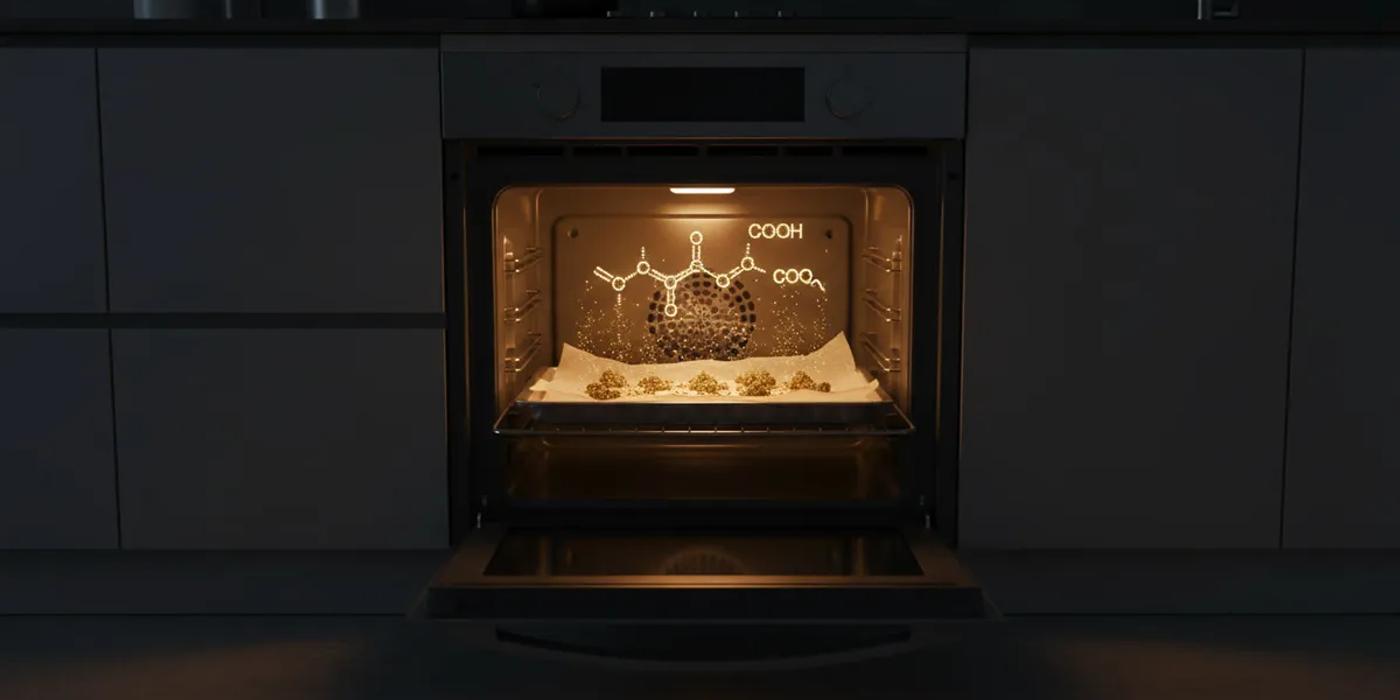
If you have ever tried eating raw cannabis and wondered why nothing happened, the answer is decarboxylation. Or more accurately, the lack of it. Raw cannabis contains THCA, which is the non-psychoactive precursor to THC. Heat converts THCA into THC. Skip the heat, and your edibles do nothing. Nail the heat, and you have full control over how strong your batch turns out.
The Science in Simple Terms
THCA (tetrahydrocannabinolic acid) is what THC looks like in the living plant. It has a carboxyl group attached, which is a small cluster of carbon, oxygen, and hydrogen atoms. That extra group is the problem. It prevents THCA from binding effectively to the CB1 receptors in your brain, which are the ones that produce the psychoactive effects.
Apply heat, and that carboxyl group breaks off as CO2 and water vapour. What remains is THC, which fits neatly into the CB1 receptors and does what people associate with cannabis. That chemical reaction is decarboxylation. The whole process is happening every time you smoke or vape, just instantly. For edibles, you have to do it as a separate step before you start cooking.
How to Decarb at Home
Oven Method (Most Common)
Preheat your oven to 240 F (115 C).
Break the cannabis into small even pieces. Don't grind it to powder, you want surface area without losing trichomes.
Spread it in a single layer on a baking sheet lined with parchment paper.
Bake for 40 to 45 minutes for cannabis flower, or 45 to 55 minutes for traditional hash. Give it a gentle stir halfway through.
It should come out toasted and golden, not brown or burnt. Brown is too far.
Let it cool completely before you touch it. Now it is ready to infuse into butter, oil, or whatever your recipe calls for.
Mason Jar Method (Less Smell)
Drop your broken-up cannabis in a mason jar. Seal the lid finger-tight, not fully sealed. You want pressure to escape.
Place the jar on a towel in the oven at 240 F (115 C). Bake for 40 to 45 minutes for cannabis flower, or 45 to 55 minutes for traditional hash.
The sealed jar traps most of the smell. Let it cool before opening, both because hot glass is dangerous and because cracking it open while it's still steaming defeats the point of the sealed jar.
Sous Vide Method (Most Precise)
Seal your cannabis in a vacuum bag, or a zip-lock with the air pressed out.
Submerge in a water bath set to 203 F (95 C) for 1 hour.
Most even heat distribution of the three methods, and almost zero smell. The downside is you need a sous vide machine, which not everyone has lying around.
Temperature and Time: The Tradeoffs
Decarboxylation is not instant. It follows a curve, and both time and temperature matter:
Lower temp, longer time (212 F / 100 C, 60 min): preserves more terpenes and gives you a broader effect profile. Best for full-spectrum edibles where flavour matters.
Standard (240 F / 115 C, 45 min): the balance most home cooks reach for. Efficient and preserves enough terpenes to taste.
Higher temp, shorter time (266 F / 130 C, 20 to 25 min): faster, but you torch more terpenes on the way and risk converting some of your THC into CBN. CBN is sedating rather than psychoactive, so unless you want sleepy edibles, this is not the move.
If this is your first batch, just use the standard method. Get a baseline, then experiment once you know what your edibles taste and feel like.
How to Know It Worked
Properly decarbed cannabis should:
Look slightly darker, golden to light brown.
Feel dry and crumbly.
Smell toasty, not burnt.
If it came out dark brown or black, you went too hot or too long. It will still work, but it will taste harsh and the effect will lean more sedating because some of your THC turned into CBN.
Once it is decarbed, use our Dosage Calculator to estimate the THC content of your infusion based on the weight and potency of your starting material.
The Bottom Line
Decarboxylation is the foundation of every edible. Skip it, your edibles do nothing. Nail it, you have full control over potency and flavour. Apply the right heat for the right time and let chemistry do the rest.
Frequently Asked Questions
What happens if you skip decarboxylation?
What is the best temperature for decarboxylation?
Can you decarb cannabis in a microwave?
Does decarboxylation smell?
References
- Wang M et al. (2016). Decarboxylation Study of Acidic Cannabinoids. Cannabis and Cannabinoid Research
From the Shop
See all

Related Posts
Decarb Rosin for Edibles — 3 Amazing Steps
If you want to decarb rosin for edibles, you're in the right place. Pressing rosin involves heat, but not nearly enough time or temperature to fully activate the THC — meaning raw rosin used in edibles will be significantly less potent than expected. In this quick guide, Fordee from Herbistry420 walks through the entire decarb ...
How to Decarb Hash and Kief for Edibles (Temperature and Time)
Knowing how to decarb hash and kief is the first step in making any hash-based edible — cannabutter, infused oil, tinctures, or infused syrup. Raw hash and kief contain THCA, not THC. Decarboxylating hash converts THCA to active THC by applying low, steady heat. Skip this step and your edibles will barely work. This guide ...
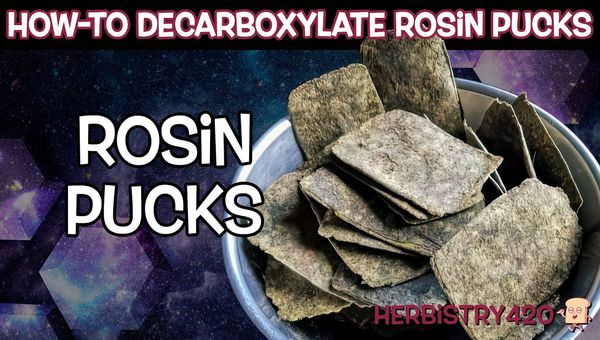
How to Decarb Rosin Pucks for Edibles (Don't Throw Your Spent Chips Away)
Decarbing rosin pucks for edibles is a simple 3-step process that activates the THC in your leftover rosin chips so they can be used in butter, oil, tinctures, or spice mixes. If you've been pressing rosin and saving your spent pucks, don't throw them away — they still contain cannabinoids worth activating. This guide walks ...