
 DoseCraft
 VapeHeatLab
Cannabis Decarb Methods: Oven vs Sous Vide vs Instant Pot
Compare three decarboxylation methods for cannabis: oven, sous vide, and Instant Pot. Pros, cons, time, temperature, and common mistakes.
by Fordee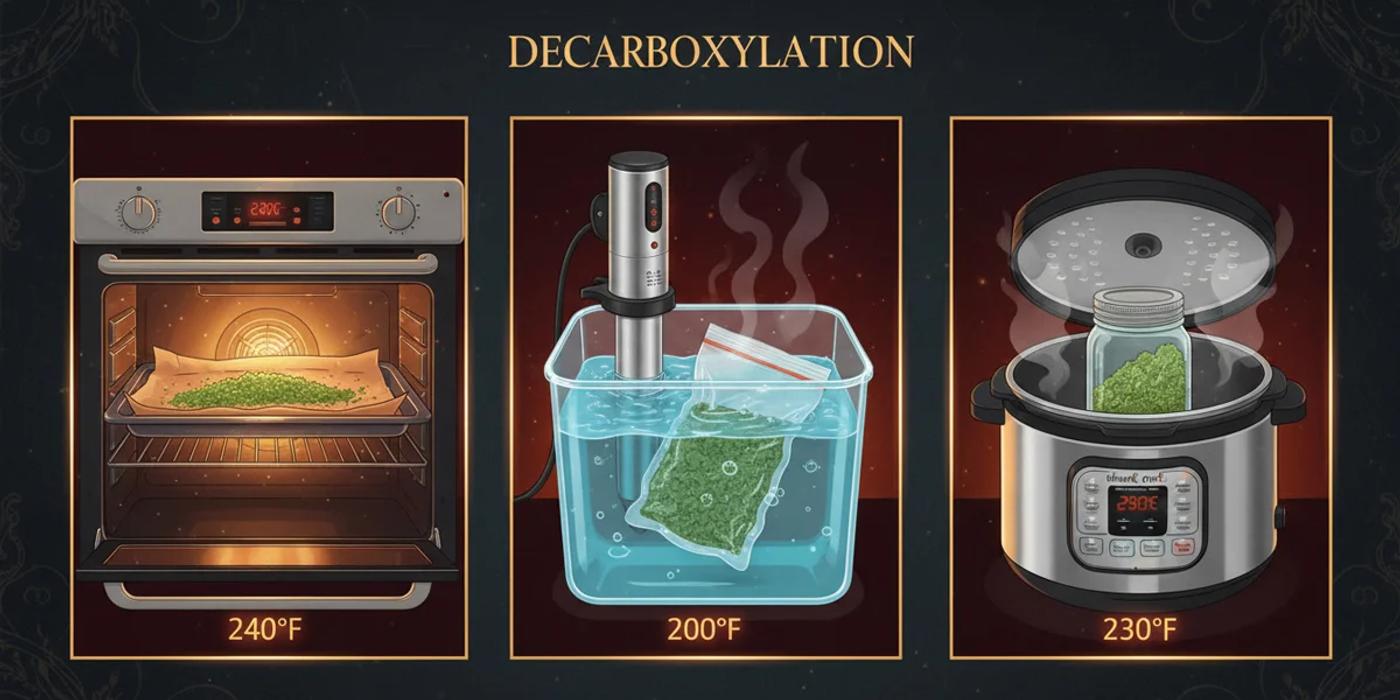
What Is Decarboxylation and Why Does It Matter?
Decarboxylation is the process of applying heat to cannabis to convert THCA (the raw, non-psychoactive form) into THC (the form that actually gets you high). Without this step, eating raw cannabis will not produce any noticeable effects because your body cannot efficiently process THCA.
When you smoke or vape cannabis, decarboxylation happens instantly from the heat. But when you are making edibles, you need to do it as a separate step before infusing your butter or oil. The quality of your decarb directly affects the potency of your final product.
There are three popular methods, each with its own trade-offs. Let me break them down.
Method 1: Oven Decarboxylation
The oven method is the most accessible approach. Nearly everyone has an oven, and the process requires no special equipment.
How to Do It
- Preheat your oven to 110°C (230°F).
- Break your cannabis into small pieces, roughly the size of a grain of rice. Do not grind it into powder.
- Spread the pieces evenly on a parchment-lined baking sheet.
- Bake for 35-40 minutes, stirring gently halfway through.
- The cannabis should turn from green to a light golden brown. It will smell strongly.
Pros
- No special equipment needed
- Fast and straightforward
- Works for any quantity
Cons
- Uneven heat distribution can lead to hotspots that over-decarb some material
- Strong cannabis smell fills your kitchen and home
- Oven temperatures are often inaccurate by 5-15 degrees, which matters at this precision
Tip: Use an oven thermometer to verify your actual oven temperature. A 15-degree difference can mean the difference between good decarb and burnt terpenes.
Method 2: Sous Vide Decarboxylation
Sous vide is the gold standard for precision. A sous vide circulator holds water at an exact temperature, which means your cannabis decarbs evenly with zero guesswork.
How to Do It
- Set your sous vide circulator to 95°C (203°F).
- Place your broken-up cannabis in a vacuum-sealed bag or a zip-lock bag with the air pressed out.
- Submerge the bag in the water bath and clip it to the side of the container.
- Cook for 60-90 minutes.
- Remove the bag and let it cool before opening.
Pros
- Extremely precise temperature control, no hotspots
- Virtually no smell since the cannabis is sealed in a bag
- Preserves more terpenes due to lower temperature and sealed environment
- Consistent results every single time
Cons
- Requires a sous vide circulator (investment of 50-100 euros)
- Takes longer than the oven method (60-90 minutes vs 35-40)
- Slightly more setup involved
If you already own a sous vide circulator for cooking, this is the obvious choice. The precision and lack of smell make it worth the extra time.
Method 3: Instant Pot Decarboxylation
The Instant Pot method is a middle ground: faster than sous vide, more contained than the oven, and uses equipment many people already have in their kitchen.
How to Do It
- Place your cannabis in a mason jar and loosely screw on the lid (do not seal tightly, the jar needs to vent).
- Put a trivet or silicone mat in the bottom of your Instant Pot and add about 2 cups of water.
- Place the jar on the trivet inside the Instant Pot.
- Set to high pressure for 40 minutes.
- Let the pressure release naturally. Do not quick-release, as the sudden temperature change can affect quality.
Pros
- Contained smell since the cannabis is in a sealed jar inside a sealed pot
- Faster than sous vide
- Very consistent results due to the stable pressure environment
- Most people already own an Instant Pot
Cons
- Limited by the size of your mason jar and Instant Pot
- Slightly less precise than sous vide
- The high pressure environment means the process is slightly different chemically, though results are excellent
Which Method Should You Choose?
Here is a quick decision guide:
- Choose oven if you want the fastest, simplest method and do not mind the smell.
- Choose sous vide if precision, terpene preservation, and no smell are your priorities.
- Choose Instant Pot if you want a good balance of convenience, containment, and consistency.
In my experience, sous vide produces the most consistent and highest-quality results. But the Instant Pot is a very close second and is what I recommend for most people. The oven works fine if it is all you have, just be mindful of temperature accuracy.
Common Decarboxylation Mistakes
These are the mistakes that ruin batches:
- Temperature too high. Going above 120°C (250°F) starts to degrade THC and burns off terpenes. Stay at 110°C or below for best results.
- Not enough time. Under-decarbing means incomplete conversion of THCA to THC. Your edibles will be weaker than expected.
- Grinding too fine. Powder burns faster than chunks. Break it up, do not pulverize it.
- Skipping decarb entirely. Some people assume that the heat during infusion handles it. It does not, at least not completely. Always decarb as a separate step first.
- Uneven spread in the oven. Piling cannabis on top of itself means the pieces in the center do not get enough heat. Spread it in a single layer.
Once you have your decarbed cannabis, you are ready to infuse it into butter or oil. Track your infusions and sessions with DoseCraft to see what works best for you.
Frequently Asked Questions
What temperature do you decarb weed at?
Does decarboxylation smell?
Can you skip decarboxylation when making edibles?
References
- BioMed Central (2026). Journal of Cannabis Research. Springer Nature
- Weedmaps Editorial (2024). What Is Decarboxylation?. Weedmaps

Related Posts
Strongest Cannabis Tincture Recipe: 27mg/ml — 4 Tips
The strongest cannabis tincture recipe I have made came out at 27.3 milligrams per milliliter — tested with the TCheck 2 potency tester. This batch used 190-proof ethanol (95% alcohol) as the solvent and decarboxylated flower. The result was so concentrated it needed to be diluted before use. This post covers the method, the TCheck ...
 Edibles
Decarboxylation Explained: The Science Behind Activating THC
Raw cannabis will not get you high. Decarboxylation is the heat step that converts THCA into active THC, and if you skip it, your edibles do nothing. Here is the science and how to do it at home.